When Health Is Treated as a System
ZenTrust Team • 12/2/2025 • 3 min read
When You Zoom Out, a Pattern Appears
Across healthcare systems, a familiar pattern keeps repeating:
people receive treatment, yet continue to experience exhaustion, anxiety, and disconnection.
Symptoms may improve, but the underlying patterns often persist. This occurs because health is frequently approached in fragments rather than as a whole system.
When complex systems are treated as isolated parts, important signals are missed.
Health Is Not a Single Variable
Living systems — whether forests, communities, or human bodies — do not function through one dimension alone.
Biology matters.
But so do stress, meaning, relationships, and environment.
When one dimension is studied in isolation, short-term patterns may emerge. Long-term patterns rarely become clear.
This observation has led many researchers to study health as a systems phenomenon — one that recognizes the interaction between body, mind, social context, and purpose.
Seeing the Whole Field
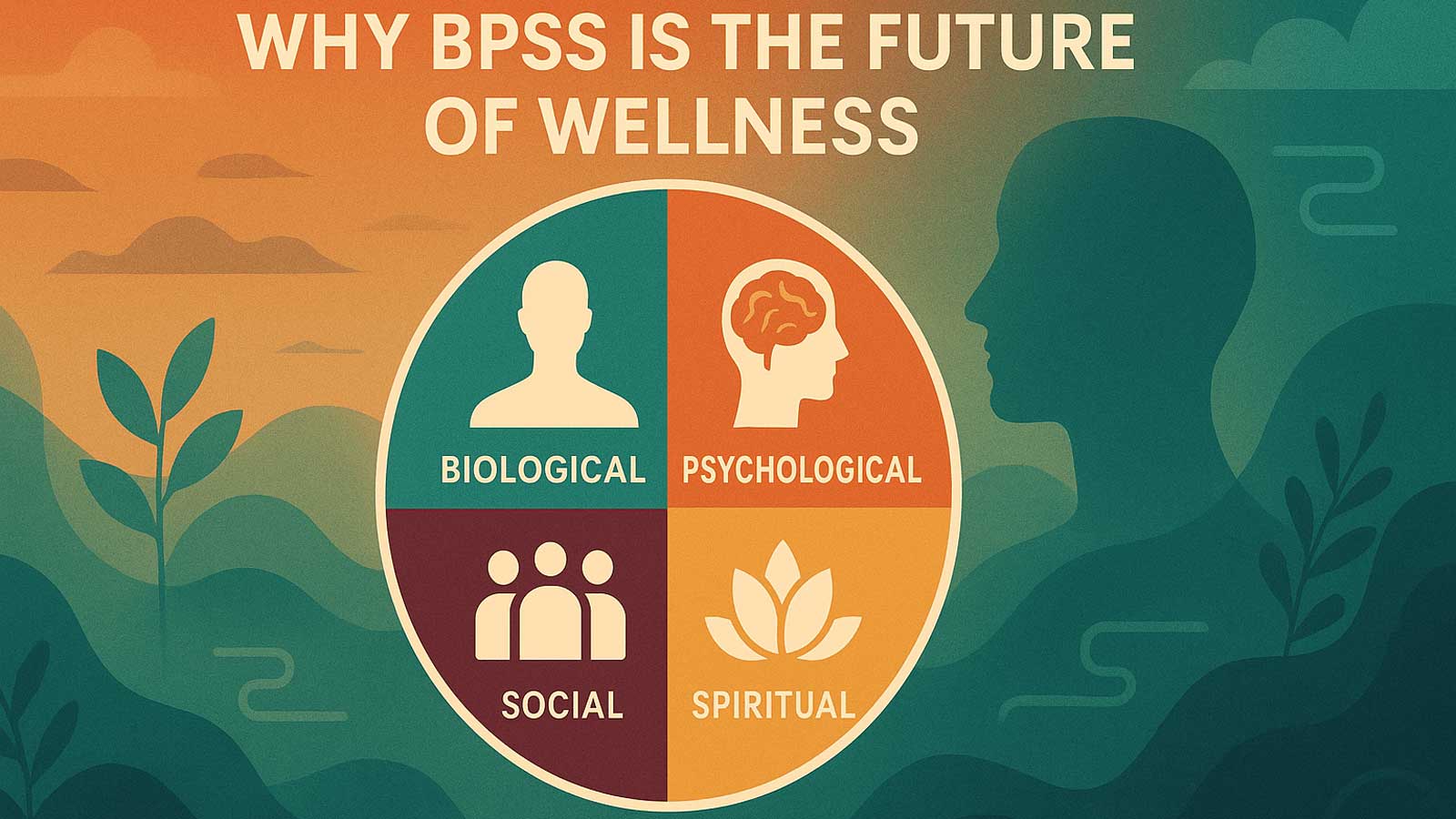
The Bio-Psycho-Social-Spiritual (BPSS) model offers a framework for understanding how these factors interact:
* Biological factors shape physical capacity and vulnerability
* Psychological factors influence stress, perception, and regulation
* Social factors affect safety, belonging, and access to support
* Spiritual factors provide meaning, orientation, and resilience
None of these operate independently. Each continually influences the others.
Why Fragmented Approaches Fall Short
When health research focuses narrowly on symptoms, it often overlooks the conditions that produced those symptoms in the first place.
Chronic pain, for example, may have biological components — but it is often connected to stress, isolation, loss of purpose, or environmental strain.
Studying only one layer can reveal patterns temporarily, while leaving the broader system unexamined.
Systems tend to reproduce their conditions unless the underlying interactions are understood.
Patterns From Integration
In nature, patterns of resilience emerge from diversity and feedback.
Forests show recovery because many elements work together: soil life, water cycles, plant succession, and animal interaction. Human health patterns may follow similar logic.
When biological, psychological, social, and meaning-based factors are studied together, health patterns become more visible.
This is not an intervention model.
It is an observation about how complex systems maintain balance.
How ZenTrust Studies This
ZenTrust studies health patterns through this systems lens.
Research initiatives examine how land systems, community patterns, and biological factors interact.
Rather than isolating variables from environment or community, research focuses on understanding the conditions in which health patterns emerge.
In this approach, study is not delivered to individuals.
It is conducted with living systems.
A Research Shift Already Underway
As societies face rising stress, chronic illness patterns, and ecological change, interest in integrated health research continues to grow.
This is not a rejection of medicine or science.
It is an expansion — recognizing that health, like ecology, functions best when systems are studied together.
When health is approached as a living system rather than a mechanical fix, prevention patterns become clearer, recovery patterns deepen, and resilience patterns emerge.